

Why Your Workspace Matters More Than You Think
Your physical environment is one of the most overlooked factors in focus. It’s not about being perfect—it’s about being intentional. When you’re surrounded by clutter, bad lighting, and noise, your brain has to work harder just to stay on task. That’s energy you could be using for actual work.
The good news? You don’t need an expensive office redesign. Small, strategic changes—the right desk height, better lighting, sound management—can dramatically shift your ability to concentrate. We’ve seen people transform their focus in just a few weeks by adjusting these fundamentals.
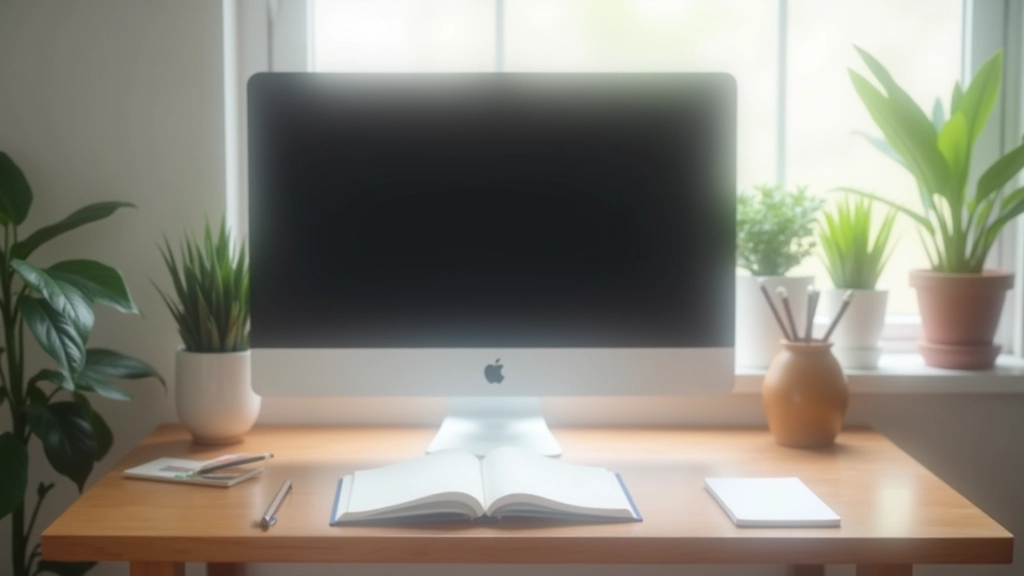
The Desk Setup: Foundation for Everything
Start with the basics. Your desk height should allow your elbows to sit at roughly 90 degrees when your arms rest on the surface. Too high, and you’ll develop shoulder tension. Too low, and you’ll hunch forward—which kills focus because physical discomfort constantly pulls your attention back to your body.
Monitor placement matters just as much. The top of your screen should be at or slightly below eye level, about 20-26 inches away. This prevents neck strain and keeps your posture upright. You’re not just optimizing comfort—you’re removing micro-distractions that drain mental energy throughout the day.
Beyond ergonomics, consider what’s actually on your desk. We recommend the 80/20 rule: keep only 20% of what you actually use regularly within arm’s reach. Everything else goes into drawers or shelves. Visual clutter isn’t just messy—it’s cognitively expensive. Every object in your field of vision competes for attention.

The Setup Checklist: Desk height at elbow level when seated. Monitor at arm’s length, top of screen at eye level. Chair supporting lower back. Only essential items on surface. One thing on your desk—everything else stored away. This isn’t perfectionism. It’s removing friction.
Lighting: The Invisible Focus Tool
Lighting affects your ability to concentrate more than most people realize. Poor lighting doesn’t just strain your eyes—it affects your circadian rhythm and energy levels throughout the day. You need enough light to see clearly, but not so much that you’re squinting at glare.
Natural light is ideal. If you can position your desk near a window, that’s your best-case scenario. It supports your natural sleep-wake cycle and reduces eye strain. But here’s the catch: you want light coming from the side, not directly behind your monitor. Direct backlighting creates glare, which actually makes it harder to focus.
Can’t access natural light? Get a desk lamp. Look for something in the 4000-5000K color temperature range (neutral white). Avoid anything too warm (yellow) in the afternoon—it signals to your brain that it’s evening, which can make you feel sluggish. Bright, neutral light keeps your circadian system aligned and your focus sharp.

Managing Sound and Interruptions
Silence isn’t always the goal—some people focus better with background noise. But unpredictable interruptions are a killer. It takes about 23 minutes to fully regain focus after an interruption. That’s not a small thing.
If you’re in a shared space, invest in noise-canceling headphones. You don’t need to play music—the noise cancellation alone removes ambient distractions. Some people use brown noise or lo-fi music. Others prefer silence. The key is controlling what you hear instead of letting your environment control you.
Physical barriers help too. If you have space, even a small partition between you and foot traffic reduces visual distractions. Close your door if you have one. Put your phone in another room. Tell people your focus hours. You’re not being antisocial—you’re protecting the conditions you need to do your best work.
Temperature and Air Quality
Temperature affects focus in surprising ways. Too cold, and you’re uncomfortable and tense. Too hot, and your brain feels sluggish. The sweet spot is usually around 20-22C (68-72F). If you can’t control the thermostat, a desk fan or space heater gives you personal control.
Air quality matters too. Stale air leads to fatigue and reduced cognitive performance. Open a window for 5 minutes every hour if you can. If you’re working in a sealed office, consider a small air purifier. You won’t feel the difference immediately, but your focus will improve over the course of the day.
Remember: You’re not trying to build a showroom. You’re building an environment that removes obstacles to concentration. Every adjustment you make is about reducing the friction between you and deep work.
Putting It All Together
Start with one change. Don’t try to redesign everything at once. Maybe you adjust your desk height first. Then you upgrade your lighting. Then you add noise management. Small, incremental improvements compound over time.
The real test is how you feel during your work. Are you noticing fewer interruptions in your attention? Are you less physically tense? Are your sessions feeling more sustainable? Those are the signals that your workspace is working for you, not against you.
Disclaimer: This article is for informational and educational purposes. It describes general principles for workspace design and focus optimization. Individual needs vary significantly—factors like medical conditions, neurodiversity, and personal preferences all influence what works for you. If you’re experiencing persistent difficulty with focus or concentration, we recommend consulting with a healthcare professional or occupational therapist who can assess your specific situation. This content isn’t a substitute for personalized professional guidance.